

The Realm of Openheim
Faith, decay, and a fractured throne
Canonical Openheim setting overview — gothic low-fantasy realm with twelfth-century European texture, set in the sixth century since founding.
Overview
A young kingdom of steel, smoke, and half-remembered horrors, clinging to the edge of the known world.
Time and Calendar
Twelfth-century texture, sixth-century chronology.
Openheim is a young kingdom clawing at the edge of the known world—rugged, fractious, and never fully tamed. Settled only six centuries ago by the Altgrafen, it spans some 280,000 square kilometres of hill, forest, mountain, and coast, a realm that feels older than its years because the land itself remembers what came before. The bones of the Veth, an alien civilisation extinguished 24,000 years past in the Flame Cataclysm, still litter the earth. Their ruined towers, silent machines, and giant stones stand half-swallowed by moss and soil; from those places things still sometimes crawl. The present year is 600 AF. In look, manners, arms, and institutions the realm wears the texture of twelfth-century Europe—stone keeps, mailed knights, cathedral towns, and feudal ceremony—yet it is a civilisation built atop inheritances it cannot fully read.
Geography and Atmosphere
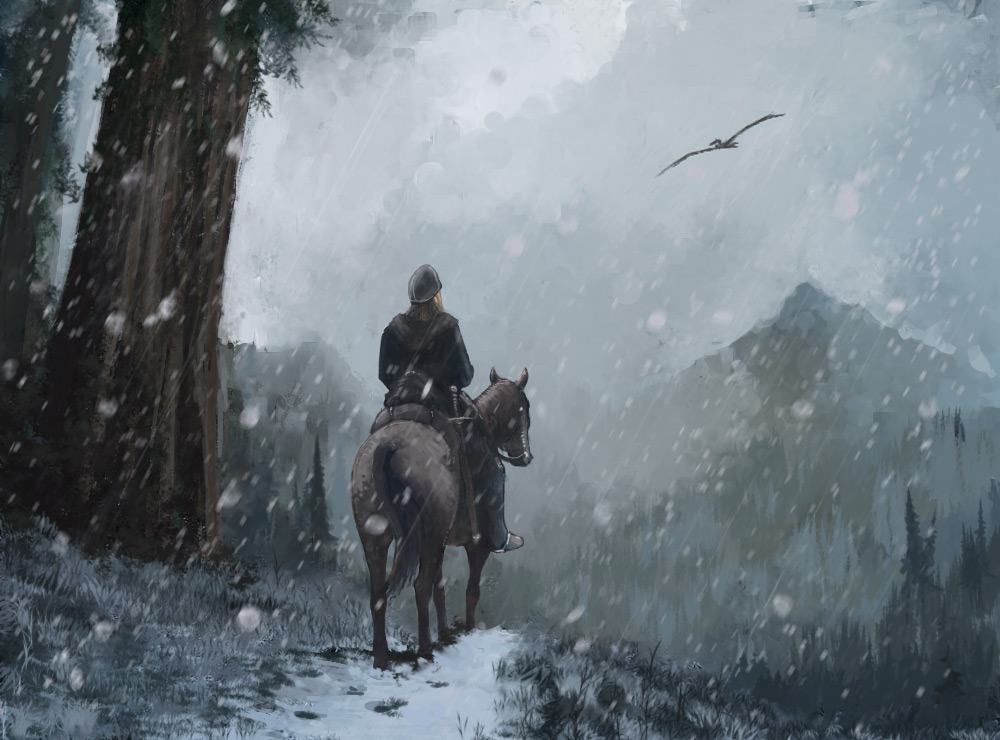
The land is defined by its hard edges. To the north and north-west rise towering mountain ranges (the Ironcrags among them), their peaks lost in mist, isolating Openheim from the wider continent. In the west the highlands and dense, dark forests form another wall, home to the resilient Wealden who have learned to live among steep slopes and watchful trees. Southward lies only a treacherous ocean of storms and black water, rarely sailed and never trusted; here the Suddowen cling to jagged coasts and wind-scoured hills, a people shaped by isolation and the knowledge that the sea gives nothing freely. Eastward the great inland sea opens like a living road. Merchant ships crowd its waters, and along its shallow shores and islands the Fenmen have made themselves masters of trade and the first line against nomadic threats. Between the sea and the untamed wilds of the far north-east lies the Karn peninsula, where the Karnfolk endure constant pressure from both sides—raiders one day, monsters the next. In the fertile central grasslands and river valleys the Altgrafen still form the heart of the kingdom, their dialects and customs the closest to the original settlers who first claimed these lands.
Cities such as the capital Thronheim stand as grim stone bastions beneath leaden skies. The air smells of damp earth, salt, and decay, and southern storm fronts regularly plunge the realm into dread-filled gloom.
Political Structure
The realm is an elective monarchy in the old style, closer to a quarrelsome empire than a true kingdom. One hundred and sixty-nine demesnes (ten Earldoms, twenty-seven Baronies, and one hundred and thirty-one Counties) answer, in theory, to the High King. In practice each noble rules with wide autonomy, and the crown itself is won by intrigue, gold, threat, and the occasional quiet murder. The title is held for life, though a rare majority of the Earls can force an abdication. Every year the great lords and their chosen vassals must journey to the capital, Eiriksburg, to renew their oaths in a ceremony thick with tension and half-hidden knives. The city itself is a mirror of the realm: each Earldom keeps its own ward within the walls, a permanent claim staked in stone and influence. The sitting High King is Albrecht the Hollow, Earl of Dunfeld. Once a reformer who spoke of justice and stronger borders, he has been worn smooth by nine years of compromise. His former allies now pull the strings; the court is a nest of rival ambitions; and the common folk of the hinterlands find their pleas unanswered while raiders burn their fields and worse things slip across the frontiers. Rumours already circulate of another Earl gathering support for a bid of his own.
The sitting High King is Albrecht the Hollow, Earl of Dunfeld. Once a reformer who spoke of justice and stronger borders, he has been worn smooth by nine years of compromise. His former allies now pull the strings; the court is a nest of rival ambitions; and the common folk of the hinterlands find their pleas unanswered while raiders burn their fields and worse things slip across the frontiers. Rumours already circulate of another Earl gathering support for a bid of his own.
Every year the great lords and their chosen vassals must journey to the capital, Thronheim, to renew their oaths in a ceremony thick with tension and half-hidden knives. The city itself is a mirror of the realm: each Earldom keeps its own ward within the walls, a permanent claim staked in stone and influence.
The Earls hold most of the true power and are the most stable, while the lower counties can change hands based on the favour of the greater lords. The HighKing is required to keep the realm stable, and to do so the Earls need to be reined in and cowed, not an easy task for a weak King.
Society, Culture and Ethnicity
The music of the realm is mournful: dirges on lutes and bone pipes drifting through misted valleys.
Rural communities endure hard labour and keep grim festivals—such as the Vigil of Embers—to hold distant terrors at bay. Artisans work reliquaries and talismans in which beauty and dread are inseparable.
Society remains rigidly stratified. Nobles and clergy dominate merchants, artisans, and peasantry. Ducal courts are rich in ceremony yet steeped in paranoia; many old houses are said to carry hereditary curses. Rural communities endure hard labour and keep grim festivals—such as the Vigil of Embers—to hold distant terrors at bay. Artisans work reliquaries and talismans in which beauty and dread are inseparable. The music of the realm is mournful: dirges on lutes and bone pipes drifting through misted valleys.
Religion and the Supernatural
Beyond every border the wild presses in. Strange creatures of flesh and worse cross the mountains and forests in every season. When the Eternal Flame burns low, otherworldly things—whether of light or of darkness—tear through the veil and walk among men. Both are equally deadly to mortal flesh. The Church of the Eternal Flame stands constant vigil against them. Its doctrine is simple and absolute: two primordial powers locked in eternal opposition, and between them the Flame that must never be allowed to die, lest the two combine and unmake reality itself.
An Altgrafen scholar once rediscovered a sacred brazier amid the Veth ruins and rekindled that Flame; the most terrible creatures withered or fled, and the Church was born. Ever since, the Flame has been both shield and warning.
Smaller sects diverge from orthodoxy, and in remote places heathen cults still honour older gods of storm, forest, and bone through blood-marked rites.
Magic in Openheim is a thin and hard-won thing. The old high arts of the Veth are gone. What remains is Imbuement—power drawn through faith, relic, and talisman, channelled by those the Church recognises or by those bold enough to risk its notice. Most folk never see true wonders, only the results of steel, cunning, and hard-won favour.
Military and Conflict
Military strength is fragmented. Each lord raises troops for his immediate liege; quality and numbers depend on the wealth and will of the noble in question. Even the lowest lord keeps a handful of trusted companions.
The Order of the Stable Blade serves as the Church’s militant arm, fighting in ash-grey armour etched with sacred runes.
Duchies quarrel among themselves as readily as they face external threats: Ironcrag raiders, western forest horrors, and sea-spawn along the southern coast. Without unity at the top, local survival often supersedes any notion of national defence.
Player Heroes
Yet the realm still produces heroes. Companies of them travel the roads and river valleys, contracting with nobles and towns to clear nests of beasts, purge corrupted ruins, or hunt the things that slip through when the Flame flickers. Fame is currency. Success in the wilds can raise a warrior to near-mythic status. In almost every town there are fighting pits; in the great cities stand coliseums where captured horrors are loosed for blood and spectacle. A thriving trade in live exotic creatures feeds these arenas, and the same markets that sell monsters also sell the stories of those who kill them.
Themes and Aesthetic
Openheim is a land of sharp edges and unfinished business. Its mountains hide older things than men. Its coasts and forests breed both opportunity and quiet death. Its nobles scheme while the borders fray. And somewhere in the moss-choked Veth ruins, or beyond the next ridge, or beneath the next storm, there is always something waiting to be found—or to find you first.
Only the clever, the cruel, the faithful, or the simply stubborn endure here. The rest become cautionary tales told around the next fire.