

Story Lens
The Weight of the Road
Exhaustion is slow ruin, counted one hard step at a time
Mira marched two nights through rain with wet boots and no fire. By the ruins she could still fight, but her hands shook on the bowstring and she judged distance poorly. Nothing dramatic happened at once; the world simply grew heavier and less forgiving.
Fatigue tracks that grind. Long travel, missed sleep, hunger, harsh weather, and overexertion pile strain before steel ever meets steel. You can push for one more scene, but every push narrows options and forces hard calls about pace, camp, and risk.
- Gain fatigue from explicit stressors: forced march, no rest, deprivation, exposure, and repeated strain.
- Each fatigue step must apply visible pressure: weaker checks, reduced tempo, or constrained recovery.
- Clear fatigue through structured recovery with clear requirements and partial-rest outcomes.
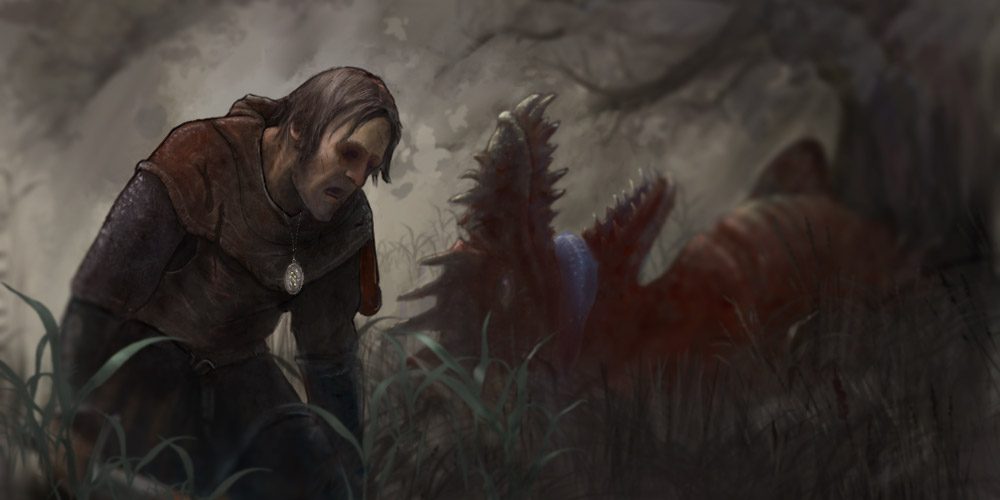
Introduction
Fatigue tracks the accumulating cost of exertion. It creates meaningful pressure without ending fights prematurely.
Fatigue is how OpenRPG tracks the cost of pushing hard. It does not punish characters for fighting — it punishes overextension. A standard combat round costs nothing. Sprinting, charging, using imbuements, and wearing armor you are not built for all cost something. That cost accumulates across a fight and eventually forces choices.
What is Fatigue?
Fatigue creates tactical pressure by making overextension matter before a character is fully defeated.
Every character has a fatigue pool derived from their Endurance, Balance, and Discipline. An average character has a pool of around 10. As fatigue accumulates, penalties escalate in four clear stages — Fresh, Winded, Taxed, and Spent. Spent characters are at serious risk.
A typical 4 to 5 round fight with moderate exertion costs 3 to 4 fatigue — enough to feel the effort, not enough to cripple. A brutal extended fight or a character making poor equipment choices will push further. Managing fatigue is a tactical layer, not a punishment for showing up.
Fatigue Pool
Your fatigue pool is derived from Endurance, Balance, and Discipline. Average characters have a pool of around 10.
Fatigue pool is calculated as: (physicalEndurance + physicalBalance + mentalDiscipline − 20) / 7. The pool represents how much strain a character can absorb before penalties escalate. A higher pool means more room to push before paying a cost.
| Pool size | What it means |
|---|---|
| 6–8 | Low resilience. Must manage exertion carefully. One or two strenuous actions before entering Winded. |
| 9–11 | Average. Can sustain a moderate fight with a few strenuous actions before penalties begin. |
| 12–15 | High resilience. Can push hard across a longer fight before fatigue becomes a real concern. |
| 16+ | Exceptional stamina. Fatigue is rarely a limiting factor in a single engagement. |
Gaining Fatigue
Standard combat costs nothing. Exertion, non-proficiency, and heavy armor accumulate fatigue over time.
Most actions in a combat round cost no fatigue. Fatigue accumulates from deliberate overexertion and from the sustained cost of equipment that exceeds a character's training or physical tolerance.
| Action | Fatigue cost |
|---|---|
| Standard attack, defend, guard, brace, normal movement | 0 |
| Sprint | 1 |
| Charge | 1 |
| Imbuement use | 1 |
| Sustained climb or swim (per round) | 1 |
| Flee (full round) | 2 |
| Two imbuements in one turn | 2 |
| Forced march (per hour beyond normal travel) | 2 |
Equipment modifiers
| Situation | Additional fatigue cost |
|---|---|
| Non-proficient weapon — per attack action | +1 |
| Non-proficient armor — per round of active combat | +1 |
| Medium armor (proficient) — per 3 rounds of active combat | +1 |
| Heavy armor (proficient) — per 2 rounds of active combat | +1 |
- Equipment modifiers accumulate passively — a proficient soldier in heavy armor in a 6-round fight pays +3 fatigue from armor alone.
- Non-proficiency and armor weight stack — a non-proficient character in heavy plate will exhaust their pool quickly.
- Light armor worn by a proficient character costs no additional fatigue.
Fatigue Effects
As fatigue accumulates, penalties escalate through four flat stages based on your current fatigue total.
Fatigue thresholds are tracked as flat numbers, not percentages. Check your current fatigue against the table below after each cost is applied.
| State | Fatigue spent | Effect |
|---|---|---|
| Fresh | 0–3 | No penalty. Operating at full capacity. |
| Winded | 4–6 | −5 to all physical skill rolls. |
| Taxed | 7–9 | −10 to all physical skill rolls. |
| Spent | 10 (pool exhausted) | −20 to all physical skill rolls. On the next strenuous action, the GM may apply a risk of Downed. |
- Penalties apply to physical skill rolls only — mental and social actions are not directly penalised by fatigue.
- A character who reaches Spent is not automatically incapacitated but is at serious risk if they push further.
- Fatigue penalties stack with other modifiers — a Winded character who is also Prone pays both penalties.
Recovering from Fatigue
Fatigue recovers through rest and safety. Short rests restore partial fatigue; long rests and sleep restore the full pool.
| Rest type | Fatigue recovered |
|---|---|
| Short rest (10 minutes, no active threat) | 2–3 |
| Long rest (1 hour) | Full pool |
| Sleep (full night) | Full pool |
- A short rest requires at least 10 minutes without active combat or forced movement.
- Short rests can typically be taken once per hour — back-to-back short rests do not stack.
- A long rest requires safety and relative comfort. Sleeping in heavy armor or in a dangerous environment may reduce recovery at GM discretion.
- Exploration fatigue (forced march, deprivation) recovers on the same schedule but may require more than one long rest if the character is Spent.
Tactical Considerations
Fatigue rewards pacing, equipment discipline, and knowing when to stop pushing.
- Sprint and charge sparingly — each costs 1 fatigue, and a fight with three or four sprints will push an average character into Winded before it ends.
- Equipment proficiency is a fatigue issue, not just a skill issue. Wearing armor or using weapons outside your training drains you faster than it drains the enemy.
- Heavy armor wearers pay a passive cost per round — in short fights this is irrelevant; in extended engagements it becomes a real consideration.
- Groups should manage who pushes hard and who conserves. A character at Taxed should not be the one sprinting to cut off the fleeing target.
- Short rests are the primary recovery tool mid-session. Plan for them. A 10-minute pause after a hard fight keeps the party functional for the next one.
- Imbuement users should count their uses before combat — two imbuements in one turn costs 2 fatigue, the same as a full-round flee.