

Openheim Bestiary
Everything that hunts, grazes, lurks, and endures
Creature types, archetypes, and stat-block framing for the Openheim bestiary written for players, GMs, and world-builders alike.
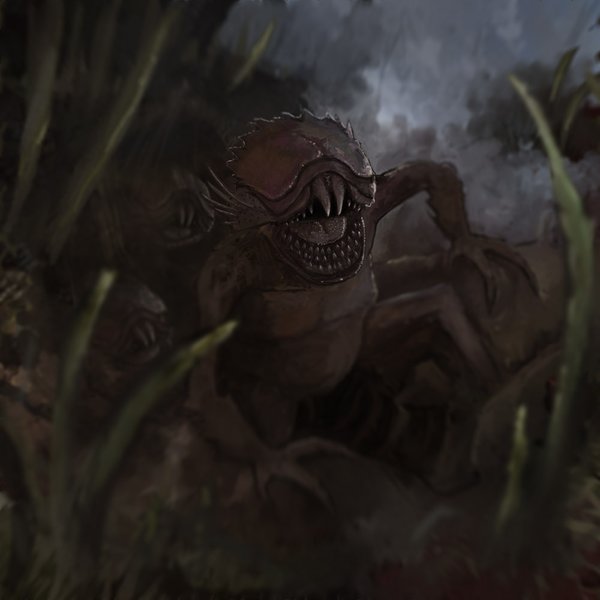
What Walks the World
Openheim's fauna has been molded by millenia of evolution or warped by relic exposure or ripped from the membranes into this world.
Creatures are the oldest category: natural predators and prey shaped by terrain and survival. Monstrosities are what happens when something goes wrong albeit relic corruption, failed ritual, a lineage that crossed the wrong boundary and kept breeding. Celestials arrive from beyond the material frame, carrying agendas that rarely align with human concerns. Akraal are entities of contested origin, neither fully natural nor fully supernatural, occupying the spaces between recognized categories. Humanoids think and plan. Monsters resist simple explanation and are classified as such because nothing else fits.
Size tells part of the story. A tiny creature can still carry a lethal bite while a gargantuan one may simply be the terrain, something to navigate rather than fight.
Archetypes: The Shape of a Creature
Every creature in the bestiary is built from an archetype which is a template that defines its fundamental survival strategy. The archetype determines base hit points, how those points scale with level, which attributes the creature leans on, and what kinds of attacks and skills it brings to bear.
Think of the archetype as the answer to: how does this creature stay alive? An Apex Predator answers that question with raw dominance, high hit points, wide attribute coverage, and the expectation that nothing in its territory challenges it twice. A Pack Hunter answers it with lean individually, devastating in numbers, built to exhaust and isolate rather than overpower. A Tank absorbs punishment on behalf of something else. A Mystic Beast survives by being strange, difficult to read, difficult to predict, and often carrying effects that outlast the encounter itself.
Archetypes cluster into rough families. Predators are ambushers, pursuit hunters, aerial raptors, aquatic killers, built around a single moment of decisive violence. Defenders and brutes hold ground, absorb punishment, and answer pressure with mass. Herd animals and grazers survive through endurance, vigilance, and the safety of many eyes. Burrowers and lurkers exploit terrain, emerging from below or from murk with the advantage of surprise. Scavengers and opportunists outlast everything else by being resourceful.
What is an Archetype?
A creature's archetype shapes how it plays mechanically. An Ambush Predator in a sanctuary behaves differently than one defending a nest. Level, environment, and lore entries tell the rest.
Level, Hit Points, and Threat
A creature's level is a rough shorthand for the threat it represents, not just in raw endurance, but what it can absorb and what a party needs to bring. A level 1 creature might be dangerous to an unprepared traveler and negligible to a veteran. A level 10 creature is a campaign event.
Hit points are calculated from the archetype's base plus a per-level increment. An Apex Predator starts high and climbs steeply. A Vermin starts low and stays low as the threat is never the individual but the swarm. The archetype's HP formula is the first thing that tells you whether an encounter is meant to be weathered, avoided, or ended quickly.
Attack slots define how a creature spends its actions. Some archetypes carry a single overwhelming strike. Others distribute across multiple lighter hits, grapples, or terrain-altering moves. The slot structure is part of the archetype, for example, a Pack Hunter does not hit like a Brute, even if their HP happens to overlap.
Lore, Tactics, and the Story of an Encounter
Each bestiary entry carries three layers beyond the stat block: lore, tactics, and encounter notes which help ground the encounter in the world.
Lore grounds the creature in Openheim's history and tells us where it comes from, what its presence signals and what locals know or fear or misunderstand about it. Tactics describe how the creature actually fights: what it prioritizes, when it retreats, whether it hunts alone or in groups. Encounter notes give the GM the situational context to answer questions like what changes when the creature is cornered, starving, protecting young, or operating near a relic site?
A beast that fights differently when wounded is more interesting than one that does not. A territorial creature creates encounters that can be avoided, maneuvered around, or deliberately triggered. The bestiary is built on the assumption that every creature should be possible to understand given enough information.